Play next
More racing games, then the most played
About Harbour Pilot
Harbour Pilot is a boat-handling simulator set in a 3D marina: breakwaters with a lighthouse and channel buoys at the mouth, three long piers with rows of berths between finger pontoons, fishing boats tied up along them and harbour sheds on the quay. You take a 9-metre motor launch from the open sea into the harbour and moor it in a series of assigned berths. The challenge is the water. A boat keeps its momentum when you ease off the throttle and can only be stopped by running the propeller astern; the rudder steers only when water is flowing past it, either from the boat's own speed or from a burst of prop wash; and going astern the rudder works the other way round, which is how real skippers back out of a berth and swing the bow up the slip. Wind blows the boat sideways in proportion to its strength, and a current sets the whole harbour drifting. Easy levels are calm with plenty of free berths; harder ones bring more berths to make, stronger wind and current, and more boats moored around the gap you must slot into. Gentle touches on the fenders are free, but harder bumps dent the hull, and a badly damaged hull ends the job. Moor every berth in time, with few bumps, for three stars.
🎮How to Play Harbour Pilot
- 1W or ↑ (or the Ahead pedal) drives the propeller forwards, S or ↓ (Astern) backwards. A/D or the wheel turn the rudder.
- 2A boat has no brakes: it keeps moving after you ease off. Slow down early and use a touch of astern to stop.
- 3The rudder only works with water flowing past it, so the boat barely turns while drifting. A short burst ahead with the rudder over swings the bow round.
- 4Follow the line through the harbour mouth and up the slip to the yellow berth, then creep in bow-first, straight, between the pontoons. Hold still until it turns green and the boat is moored.
- 5To leave a berth, back out astern; the rudder works the other way round when going backwards.
- 6Wind (shown at the top) and current push the boat sideways. Bumps dent the hull; at zero hull the job is over. Gentle touches on the fenders are free.
- 7C changes the camera (behind, high, at the helm) and H sounds the horn.
🎲More Racing Games You Might Enjoy
Drift King
Master the art of drifting around tight corners.
Moto Run
Rev your engine and dodge obstacles.
Traffic Dodger
Navigate dense traffic at high speeds.
Boat Racing
Steer a speedboat down a rushing river and dodge the rocks as the current speeds up.
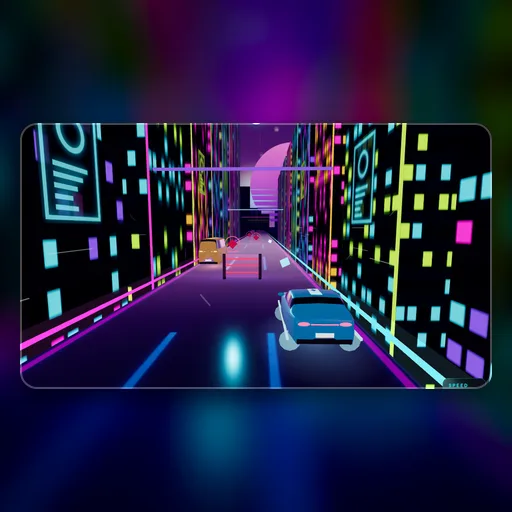
Cyberpunk Drive
Fly vehicles through neon-lit futuristic gaps.
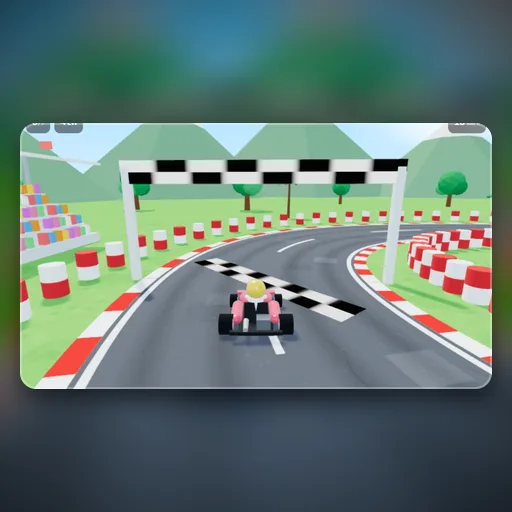
Pixel Kart
Fun, item-based kart racing action.